View all
 ERM Shelton Stat of the Week
82% of business buyers in the U.S. and 75% of those in the U.K. and E.U. say suppliers with strong sustainability commitments are well-run companies.
– B2B Pulse, 2025
If you’ve heard me speak over the last year, this will sound familiar: I live in two different worlds at the same time. There’s the world described by many of our politicians in which the planet is not in trouble, where there’s no need for regulations, incentives or behavior change of any kind to address any existential crisis. Nothing to see here. I encounter some brand managers who live in a version of this world when they say, “Consumers don’t care about sustainability.”
Then there’s the world I see in our 20 years of consumer insights. I’m including two snapshots of trendlines in the U.S. so you can see what I see.
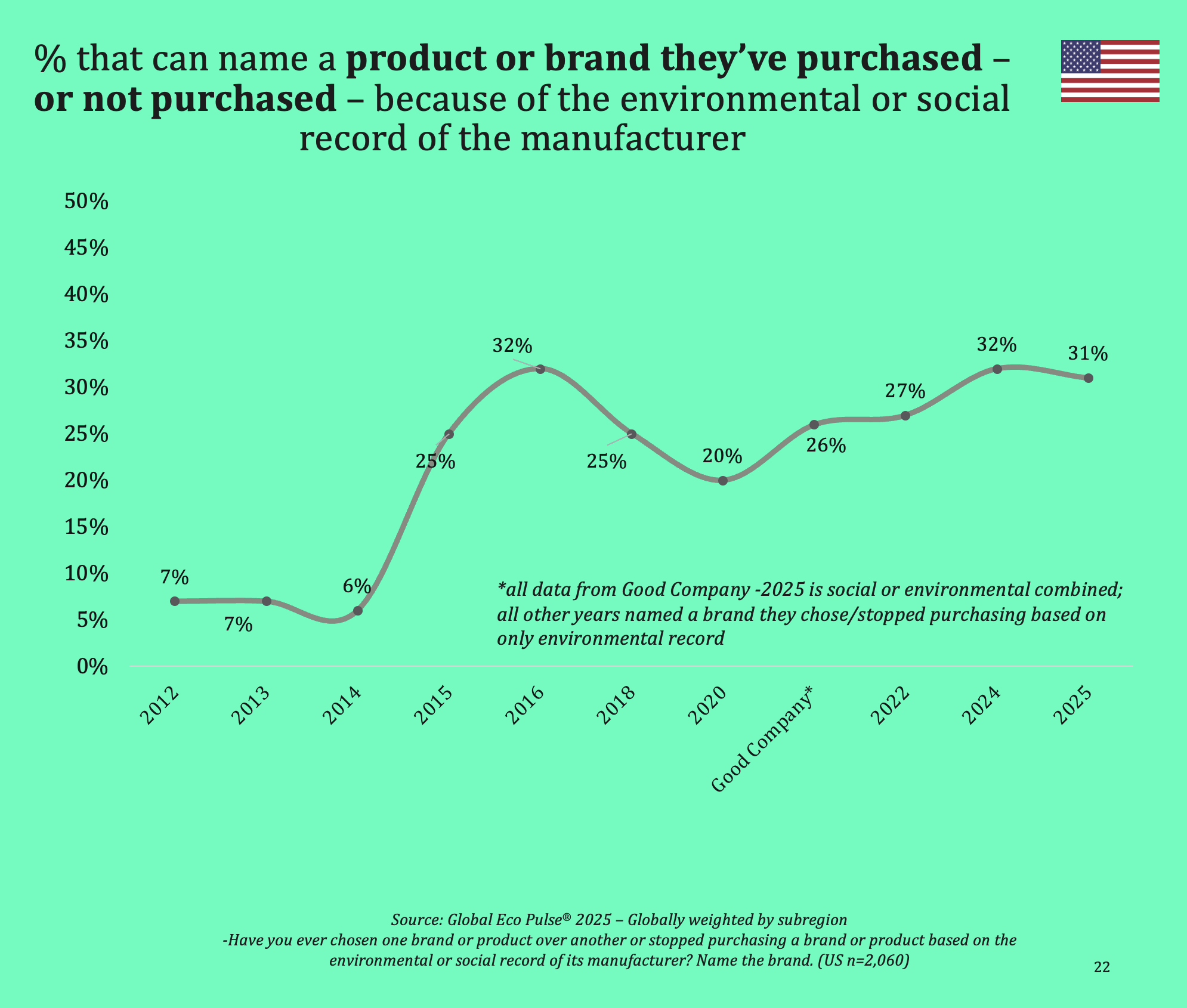
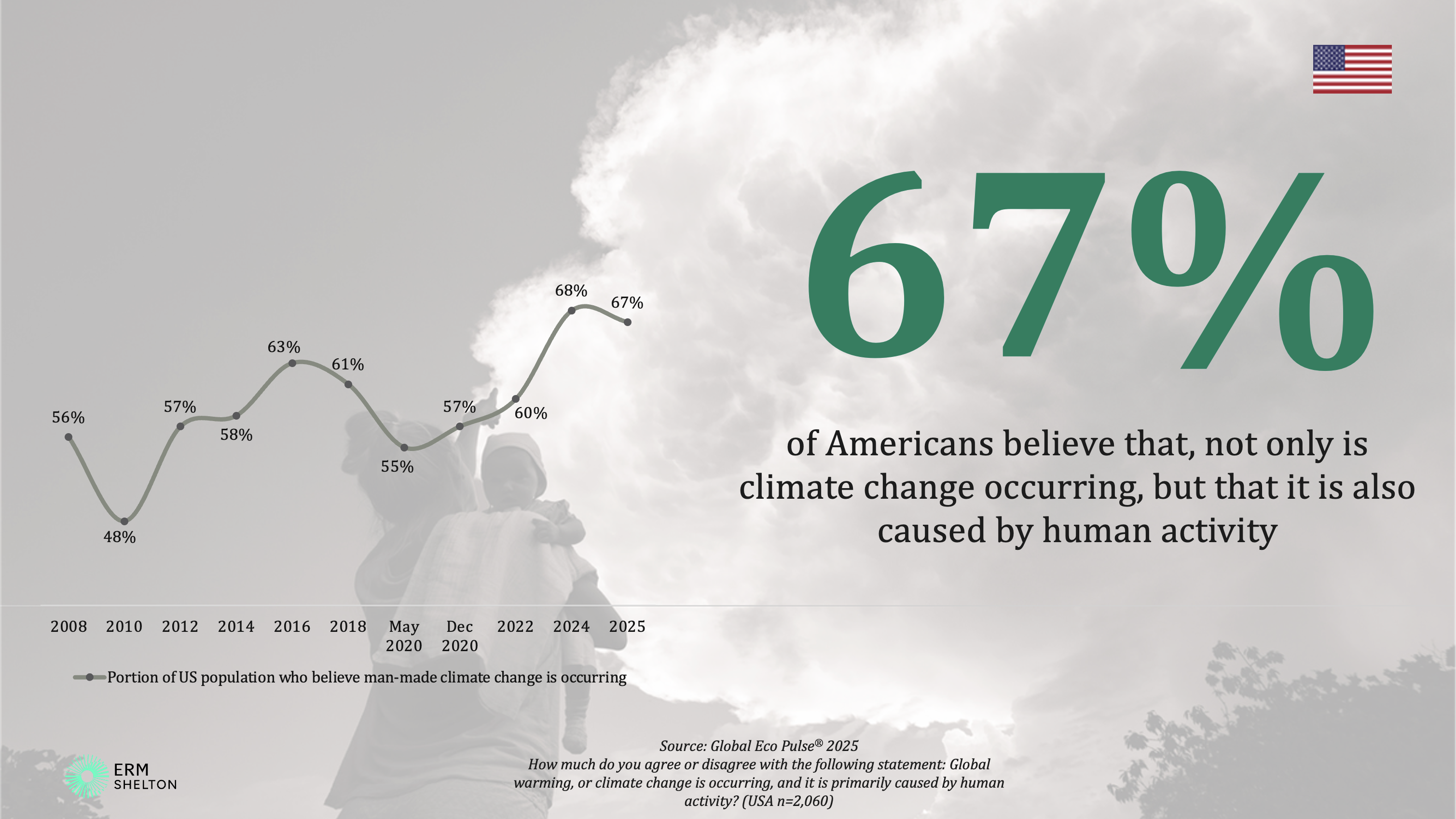
Americans are behind the rest of the world, according to our last three years of data, which we gathered globally. We have a longer trend-line in U.S. so I’m including that here.
People in the U.S. continue to believe climate change is real and caused by human activity, and they continue to put their wallets where their beliefs are, despite the political rhetoric.
That “Tale of Two Realities,” was on full display at Greenbiz, which I attended with a terrific delegation of colleagues from ERM. I had conversations with people anxious that their jobs will be eliminated because their company is no longer prioritizing sustainability — at least at the C-suite level. This continues the trend I wrote about a few weeks ago. But I also had conversations with folks who have newly been brought in to lead sustainability for a company or brand, and even one sustainability leader who is hiring.
In that Tale of Two Realities lie three conclusions I walked away from GreenBiz with, which I’ve noted below. For a more comprehensive overview of takeaways, click here to read Mark Lee’s excellent piece.
- Decisions are being made, and companies are sorting themselves into “in” and “out” buckets. It seemed to me that we all spent much of last year in limbo. Companies were trying to find their footing amid the chaos of the tariff landscape and its up-and-down execution, and companies were trying to understand what would get them branded as “woke” if they talked about it. So most paused comms, particularly sustainability comms. Now it appears clear some companies have absolutely decided not to be leaders on sustainability, that it doesn’t offer a strategic advantage and they’re in for compliance only. Others are full steam ahead, seeking out partnerships and ways to drive both savings and innovation. That clarity has been sorely needed and it looks like we’re getting it.
- EPR (Extended Producer Responsibility) is driving action on product and packaging sustainability. I don’t think I heard the acronym “EPR” once at last year’s GreenBiz; this year I must have heard it 20 times. And there’s quite a bit of energy around it. For all the brand managers who have said, “consumers don’t care about sustainability,” that’s now a moot point (it’s always been an untrue point, what consumers want is much more nuanced than a simple they want it/they don’t want it equation). Those same brand managers are getting hit with fees they didn’t see coming (even though their sustainability team has been telling them it’s coming) related to their packaging’s environmental impact/recyclability, and now they’re scrambling to drive those fees down by improving the sustainability of their packaging. Great! Even for the companies who might have decided sustainability is a compliance exercise, there’s a mandate for real packaging change, which addresses both the waste crisis and climate crisis — and gives the companies who are still “in” on sustainability an excellent storytelling opportunity to drive brand preference and sales. I’m excited to see which companies turn their concern over EPR fees into a brand and sales win through excellent messaging and consumer engagement.
- The B2B world is a sustainability bright spot. Much like our data revealed last fall: Most companies now realize that suppliers with a buttoned-up sustainability program are ALSO better run companies that stand behind their products and services. Since most companies are looking for long-term relationships with suppliers — especially when supplier components go into a company’s finished goods — it makes sense that they’d want the full package: suppliers who can offer better performance, reasonable pricing and a sustainability program that complements their own. I facilitated a session about sustainability in the supply chain and one of my panelists noted that she is not receiving fewer requests from their 400,000 customers about sustainability; she is receiving more and they’re more nuanced. Honestly, if companies and suppliers keep working together on sustainability, we will indeed create products and services that are better all the way around — and that helps get us closer to a sustainable, resilient future.
Perhaps the biggest reason to feel optimistic about the future of sustainability as a strategic business imperative: the conference was well attended. My recommendation: lean in where there’s clear business value and execute well. Then you’ll have great stories to tell internally and externally.